
Charlie Health
Charlie HealthMedical
4.027.00 Reviews
- Version
- 2.12.0
- Installs
- 10.00K
- Age Rating
- Everyone
Screenshots
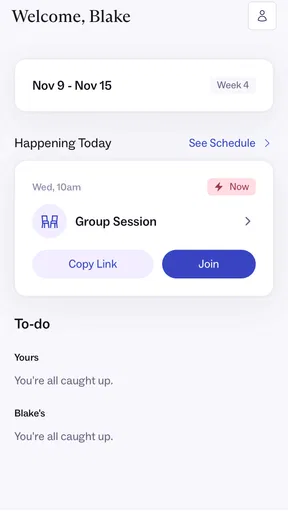
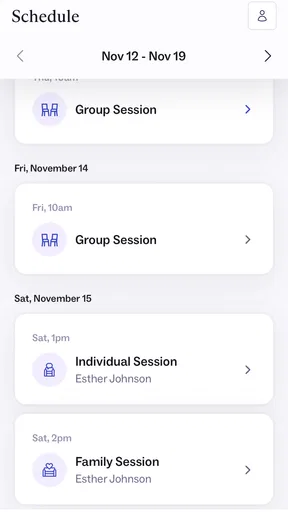
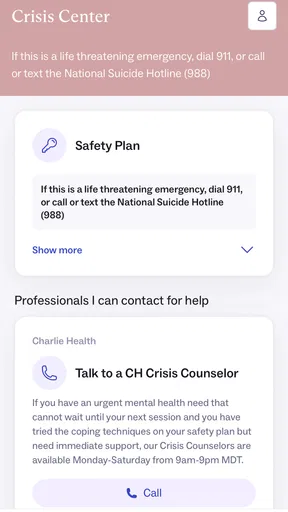
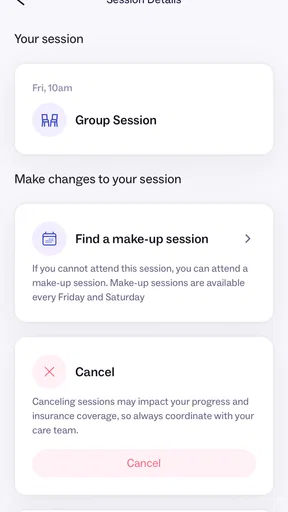

Our Review of Charlie Health
 Analysis by Appyee
When mental health support feels difficult to arrange, the idea of receiving intensive care from home can be genuinely appealing. Charlie Health is a free medical app from Charlie Health, designed around connecting people with treatment programs rather than acting as a simple mood diary or meditation tool. I approached it with that distinction in mind: this is meant to be part of a care journey, not a replacement for every kind of professional help.
My overall impression is that the app makes the most sense for someone who already knows they need more structured support and wants to explore that path without making a first trip to a clinic. It is less useful for a person looking only for quick self-guided exercises, instant counselling, or an emergency response. That difference matters, because the app’s value depends heavily on what kind of help you are seeking before you open it.
From needing support at home to finding a care pathway
The starting point is straightforward. You may be dealing with mental health difficulties that are affecting school, work, relationships, sleep, or daily routines, while also finding ordinary treatment arrangements hard to manage. Charlie Health positions itself around intensive treatment programs made for the individual, with the home setting as an important part of the experience.
I like that the concept is more substantial than a collection of inspirational messages. A wellness app can be useful for building habits, but it usually leaves the user to decide what level of care is appropriate. Here, the intended journey is closer to entering a treatment process. That makes the app more relevant when occasional self-care no longer feels sufficient.
At the same time, I would not download it expecting an instant solution. A care-focused app has to move through an assessment and matching process, and that naturally involves more steps than opening a breathing timer. The benefit is the possibility of a better-fitting program; the trade-off is that the first experience may feel less immediate.
The app is listed under the medical category, which is an important signal about how to approach it. I would treat it as a doorway into professional treatment, not as a general-purpose social app. The Everyone age rating makes it broadly accessible from a store perspective, but suitability still depends on a person’s actual needs and circumstances.
What the first decision should be
Before starting, I would ask myself one practical question: do I want structured treatment, or do I simply want information and small daily tools? If the answer is structured treatment, Charlie Health is much easier to understand. If the answer is the latter, a self-help app, educational resource, or ordinary therapy directory may feel faster and more flexible.
This is also where the home-based model has a real advantage. Someone who struggles with travel, lives far from suitable services, has a crowded schedule, or feels uncomfortable entering a clinic may find the format less intimidating. The home setting can remove a major barrier before treatment even begins.
However, home access does not mean the process is effortless. You still need a private enough place to participate, a device that can run the app, and the willingness to engage consistently. If your living situation makes confidential conversations difficult, the central promise of receiving care at home can become a practical weakness.
Following the journey rather than chasing a quick feature
In use, I found it more helpful to think of Charlie Health as a sequence of decisions. First comes recognition that ordinary coping is not enough. Then comes reaching the service, sharing enough context for the care pathway to be understood, moving through the relevant handoffs, and finally deciding whether the proposed support fits your life.
That workflow changes how I judge the app. I would not measure it by the number of buttons on its opening screen. I would judge whether it helps reduce the distance between “I need more help” and “I know what my next treatment step is.” For someone in that position, clarity and continuity matter more than decorative features.
A useful personal strategy is to prepare before beginning. Write down the main problems you want help with, how they affect ordinary days, what support you have already tried, and what makes attending treatment difficult. This is not about producing a perfect medical history. It simply makes the first handoff more useful and reduces the chance of forgetting important context when the process feels emotionally tiring.
Another practical tip is to decide in advance where you would use the app. A quiet room, headphones, and a predictable time can make remote care feel more intentional. Without that preparation, it is easy for a home appointment or check-in to compete with family interruptions, work messages, or household noise.
The handoffs are where the app earns its place
The most important part of this experience is not the download itself; it is what happens between the user and the care team. Charlie Health is developed by Charlie Health, and its purpose is tied to treatment programs rather than isolated digital exercises. That means the app’s success depends on turning an initial request for support into a coherent next step.
For me, the handoff is the point at which a digital product can either feel reassuring or frustrating. A good handoff should help the person understand what is happening next, what information is needed, and how the proposed program connects to the concerns they described. If those transitions feel unclear, even a well-intentioned service can leave a vulnerable user wondering whether the request went anywhere.
This is also why I would keep realistic expectations about response time and communication. The app is not the same as pressing a button for an immediate conversation with a clinician. It is a route into an organized service, and organized services involve coordination. Someone who needs a direct answer at this exact moment may prefer a different channel for immediate support.
The trade-off is worthwhile for people who need more than a one-off conversation. A standard therapy directory may offer a wider range of independent professionals, but it can leave the user responsible for comparing providers, contacting several offices, checking availability, and explaining the situation repeatedly. Charlie Health’s appeal is the possibility of a more guided route, even though guided routes can feel less open-ended.
I would also distinguish it from a typical telehealth appointment app. Many telehealth tools are built around booking and attending individual consultations. Charlie Health is better understood as a treatment-oriented entry point. That makes it potentially stronger for someone seeking intensity and continuity, but less attractive for someone who only wants occasional advice or a single appointment.
What a realistic day might look like
Imagine a student or working adult whose anxiety and low mood have started making ordinary responsibilities difficult. They have tried managing alone, but the pattern keeps returning. Travelling to a clinic after a full day feels unrealistic, and the idea of explaining everything to several unrelated providers is exhausting.
In that situation, the person could begin at home, describe the difficulties that are interfering with daily life, and use the resulting guidance to understand whether a more intensive program is appropriate. The important outcome at this stage is not instant relief. It is moving from vague distress to a clearer care conversation.
The person would still need to participate actively. They might need to find a private space, keep track of next steps, and decide whether the suggested structure fits their schedule and home environment. If the arrangement works, the app becomes a bridge between the initial request and ongoing treatment rather than another abandoned download.
That example also shows why this is not ideal for everyone. A person who wants a five-minute grounding exercise before a presentation is probably looking in the wrong place. A person who is ready to consider intensive support from home is much closer to the intended audience.
The result: useful structure, with a cost in flexibility
The strongest possible result is a clearer route into care that feels more manageable because it begins at home. I value that focus. When someone is already overwhelmed, removing travel and reducing the number of disconnected searches can make the first step feel achievable.
The app can also help users think in terms of treatment needs rather than app features. Instead of asking which tool will make today better, the person can ask what kind of support is needed over time. That is a more serious and potentially more productive frame, especially when symptoms are persistent or significantly disruptive.
Still, structure is not the same as personalization that always feels perfect. A program may be clinically sensible but awkward alongside work, school, caregiving, or family responsibilities. I would judge the experience partly by how clearly the service explains the commitment involved and how comfortable the user feels raising concerns during the process.
There is also a difference between feeling supported by a treatment pathway and feeling better immediately. The former can be valuable even when the latter takes time. I would avoid treating the app as a promise of instant improvement, because that expectation can make any legitimate care process seem disappointing during its early stages.
Where the workflow can break down
The first point of friction is urgency. Charlie Health should not be treated as an emergency service simply because it is a medical app. If someone may be in immediate danger or needs urgent crisis assistance, the appropriate emergency or crisis resource should take priority over starting a routine care pathway.
The second problem is privacy at home. Remote treatment sounds convenient until another person enters the room, a child needs attention, or the user shares a space with family members. I would plan around this rather than assume the home environment will automatically be calm and confidential.
The third issue is commitment. Intensive treatment is more demanding than browsing wellness content. Someone who wants complete flexibility, minimal contact, or purely anonymous self-guided material may find the process too involved. In that case, a conventional self-help app or a less structured therapy search may be a better match.
Technical friction can matter too. The current version is 2.12.0 and the app requires Android 7.0 or later, so users with older devices may need to check compatibility before relying on it. I would also keep the operating system updated where possible, because remote care is a poor place to discover that a device can no longer handle an important session.
Another limitation is that the app’s usefulness depends on the surrounding service, not only on the interface. A polished screen cannot compensate for unclear communication, an unsuitable schedule, or a treatment fit that does not reflect the person’s needs. That is why I would pay close attention to the quality of each handoff and speak up when something does not make sense.
Who should consider it, and who should look elsewhere
I would recommend trying Charlie Health to someone who wants a serious, home-based route into intensive mental health treatment and is prepared to take part in a structured process. It may be especially appealing when travel, clinic access, or the emotional effort of contacting multiple providers has become a barrier.
I would be more cautious about recommending it to someone seeking only casual wellness support, a quick educational answer, or a single flexible consultation. The app’s medical focus suggests a deeper level of engagement than those needs require. Choosing a more focused alternative could save time and avoid frustration.
It is also not the right first step for an emergency. In that situation, immediate local help matters more than completing an app-based intake or waiting for a treatment pathway to develop. That is not a criticism of Charlie Health; it is simply the difference between planned care and urgent intervention.
For people comparing it with ordinary therapy directories, the decision comes down to guidance versus choice. A directory may provide more control over selecting an individual professional. Charlie Health is more appealing if you want the service to organize the route into a broader program. Neither approach is automatically better, and the right choice depends on whether independence or coordinated structure is the bigger need.
Value, maturity, and my final take
Charlie Health is free to install, which makes exploring the service less of a financial commitment at the starting line. It has an average rating of 4.0 from around sixty ratings, with around twenty-seven written reviews, and more than ten thousand installs. Those figures suggest an app with an existing audience, while also reminding me that the rating is not a substitute for deciding whether its treatment model fits a particular person.
The app was released on April 7, 2025, so I see it as a relatively new product rather than a long-established digital health companion. That can mean the experience continues to develop, and it also makes it sensible to pay attention to updates and to judge the current workflow on its own merits. Its Everyone age label makes it broadly available, but medical suitability still requires personal judgment.
After following the workflow from the initial need for help through the practical handoffs, I see the main strength clearly: it tries to make intensive treatment reachable from home instead of leaving people to assemble care on their own. The main weakness is equally clear: the process cannot be as instant or universally flexible as a simple self-help tool.
My recommendation is to use Charlie Health when you are ready to explore structured professional support, not when you are searching for a quick digital fix. Prepare your concerns beforehand, arrange a private setting, keep track of the next step, and be honest about whether the schedule and level of care fit your life. Used with those expectations, Charlie Health can be a practical starting point for turning a difficult decision into a clearer care pathway.
Verdict
Strengths of Charlie Health
- Personalized virtual mental health programs for teens and young adults.
- Offers group sessions that can reduce feelings of isolation.
- Includes individual therapy and psychiatric support in one program.
- Care plans can address multiple conditions and emotional challenges.
- Remote access makes support available without traveling to a clinic.
Limitations of Charlie Health
- Availability may depend on location, eligibility, and insurance coverage.
- Regular sessions require a reliable internet connection and private space.
- The program may feel intensive for users seeking occasional support.
- Wait times and provider availability can vary by region.
- Not intended for immediate emergencies or crisis intervention.
Similar Picks in This Category
View All
WebMD: Symptom Checker
WebMD, LLC4.1

Microphone Amplifier
DOSA Apps4.2

Anatomy Learning - 3D Anatomy
3D Medical OU4.5

Period Tracker and Calendar
SimpleInnovation4.9

GoodRx: Prescription Coupons
GoodRx4.8

CVS Health
CVS Pharmacy4.5
Frequently Asked Questions
What is Charlie Health, and who is it designed for?
Charlie Health is a virtual mental health program designed primarily for teens, young adults, and families who need more support than traditional weekly therapy can provide. It may offer services such as individual therapy, group therapy, and family sessions. The program is generally intended for people experiencing significant emotional or behavioral challenges, but eligibility and treatment recommendations can vary after an initial assessment.
Does Charlie Health provide therapy online, and what does treatment involve?
Yes, Charlie Health delivers its core mental health services remotely through online appointments. Depending on the care plan, users may participate in individual counseling, peer-support groups, family therapy, and psychiatric services where available. Sessions require a private space and a reliable internet connection. The exact schedule, treatment length, and combination of services are personalized according to the user’s needs and clinical evaluation.
Is Charlie Health suitable for mental health emergencies or immediate crisis support?
Charlie Health should not be treated as a replacement for emergency services or immediate crisis intervention. If someone is in immediate danger, has a serious medical emergency, or may harm themselves or another person, contact local emergency services or go to the nearest emergency department. In the United States, users can also call or text 988 for the Suicide and Crisis Lifeline. Availability and crisis procedures may differ by location.
How much does Charlie Health cost, and is it covered by insurance?
The cost of Charlie Health can depend on factors such as location, insurance provider, treatment needs, and the services included in the care plan. Some users may have coverage through participating insurance plans, while others may need to discuss self-pay options. Before starting, it is important to confirm eligibility, deductibles, copayments, authorization requirements, and any possible out-of-pocket expenses directly with Charlie Health and your insurer.
What should users check before downloading or signing up for Charlie Health?
Before signing up, users should confirm that Charlie Health operates in their state or region, supports their age group, and offers the type of care they need. They should also review privacy practices, appointment availability, device and internet requirements, insurance information, and cancellation policies. Because the service involves sensitive health data, families should understand consent rules and how personal information is handled before beginning treatment.
